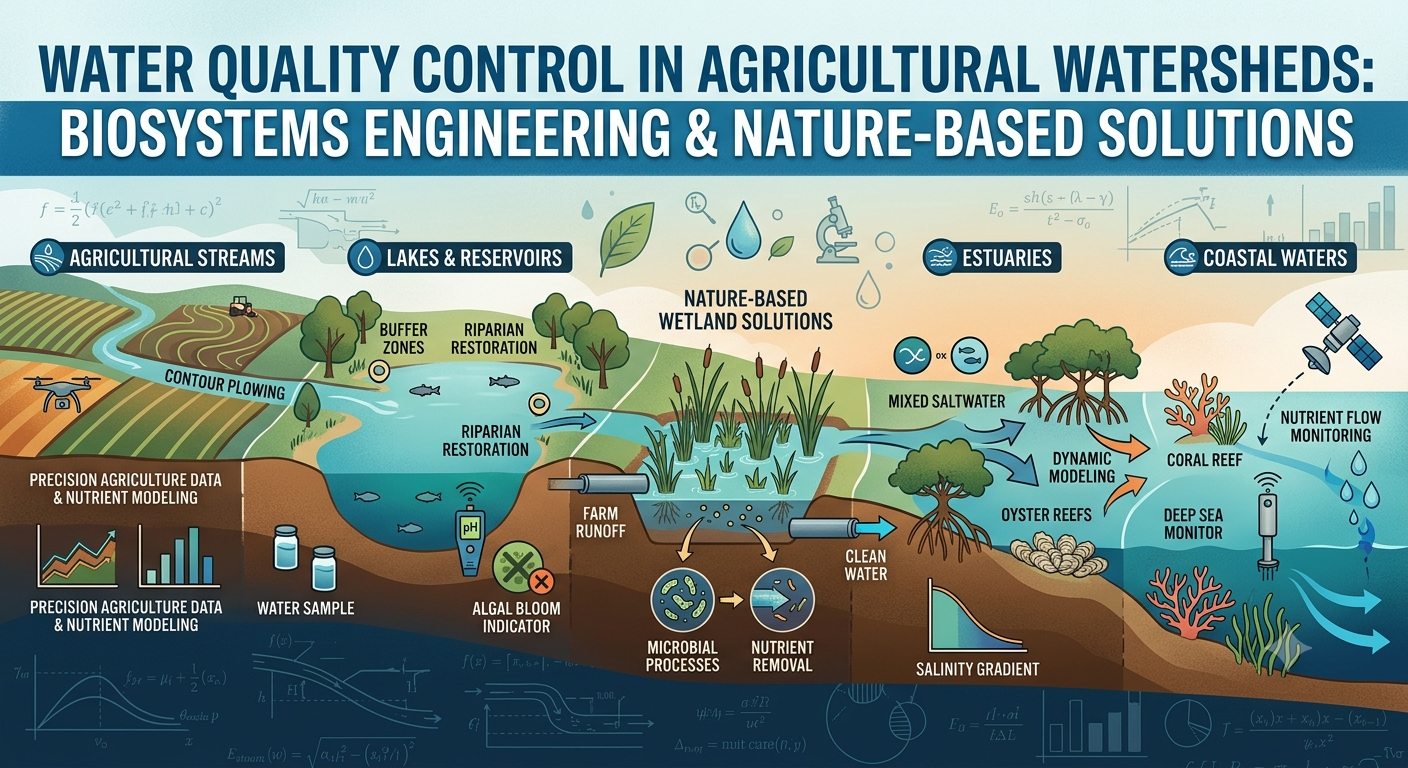
MSABE10: Water Quality Control delivers an advanced, ecosystem-based approach to managing ambient water quality across agricultural streams, lakes, estuaries, and coastal waters. Grounded in a flipped, heutagogical model, this graduate course equips biosystems engineers to diagnose water degradation, run hydrodynamic pollutant models, and engineer Nature-Based Solutions. Students synthesize technical standards with environmental ethics to resolve real-world resource conflicts affecting agriculture and fisheries. Through collaborative modeling labs, GIS spatial optimization, and simulated public hearings, learners master autonomous decision-making and strategic leadership required to safeguard aquatic ecosystems and rural livelihoods against contemporary environmental constraints.
- Faculty: Saliling, Willie Jones
This course introduces graduate
students in the biochemical processes in wastewater treatment system. They will
design suspended growth and attached growth bioreactors to remove biologically
nutrients from wastewater. They will explore process design of activated sludge
system, oxidation ponds, trickling filters, rotating biological contactors,
fluidized beds, and other bioreactor types.
- Faculty: Saliling, Willie Jones
Graduate students explores the effects of pollutants to water quality of rivers and lakes. They will be introduced to basic modeling of dissolved oxygen and biochemical oxygen demand, and nutrient dynamics. Best management practices (BMPs) and other intervention to the control of nutrients and other pollutants are emphasized. Groundwater contamination and bioremediation shall also be explored.
- Faculty: Saliling, Willie Jones
- Faculty: Castillo, Joseph
- Faculty: Sadoral, Joan
 rie624.jpg
- Faculty: Berja - Gamido, Joy Sharon
- Faculty: Saliling, Willie Jones
- Faculty: Tidula, Tito Jun