
- Faculty: Mamalo, Benhamin
- Faculty: Villanueva, Alvin John
- Faculty: Villanueva, Alvin John
- Faculty: Mamalo, Benhamin
- Faculty: Perez, Mavil Gia
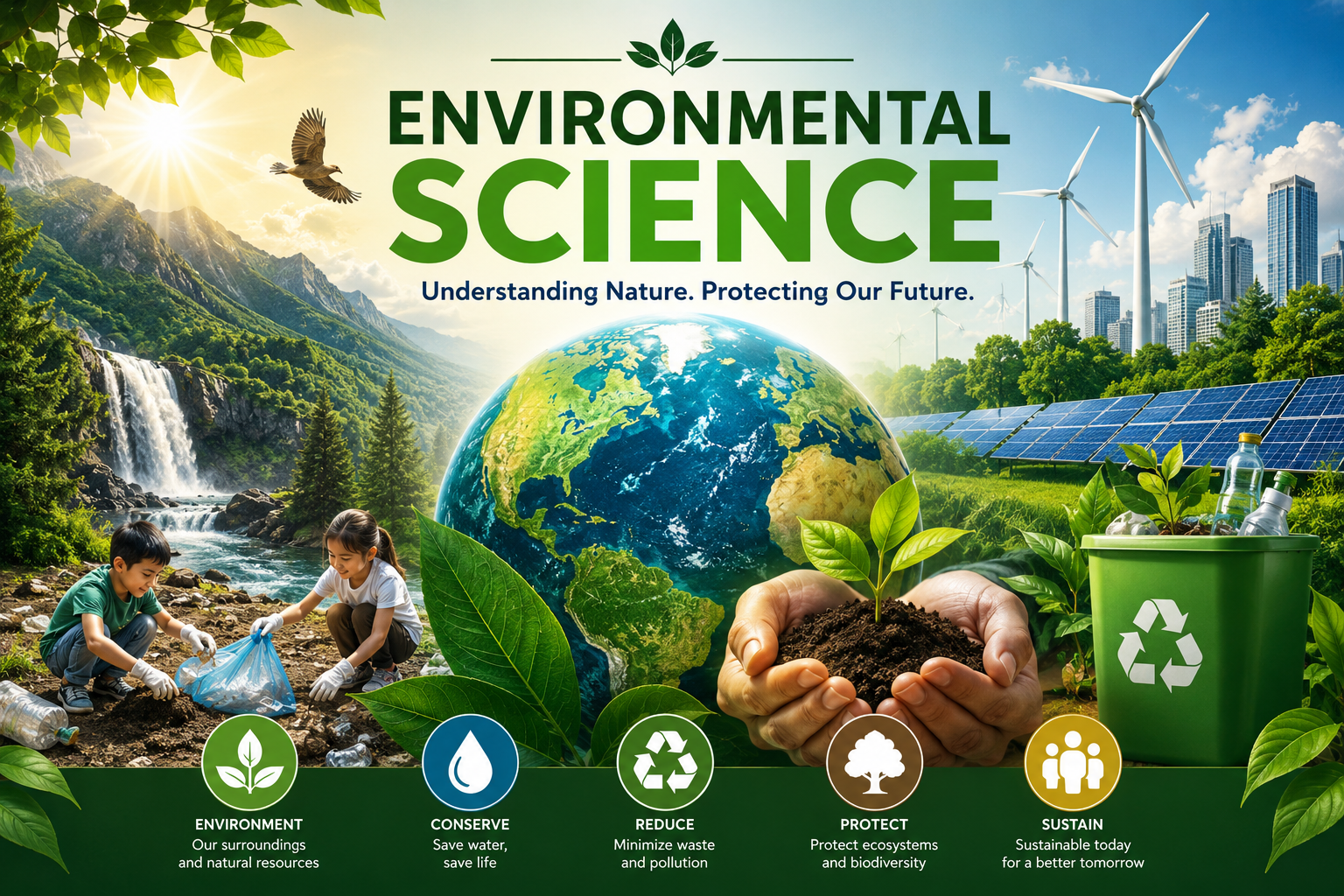
Environmental Science is an interdisciplinary course that examines the relationships between humans and the natural environment. It introduces fundamental concepts of ecology, natural resources, biodiversity, population, pollution, climate change, environmental health, and sustainable development.
The course emphasizes the causes, effects, and management of environmental problems at local, national, and global levels. Students will analyze environmental issues using scientific principles and develop practical solutions that promote environmental sustainability, resource conservation, climate resilience, and responsible citizenship.
The course also highlights Philippine environmental conditions, policies, laws, institutions, and community-based approaches to environmental management.
- Faculty: Mamalo, Benhamin
- Faculty: Villanueva, Alvin John
- Faculty: Villanueva, Alvin John
- Faculty: Cuarteros, Ritchell Joy
- Faculty: Saliling, Willie Jones
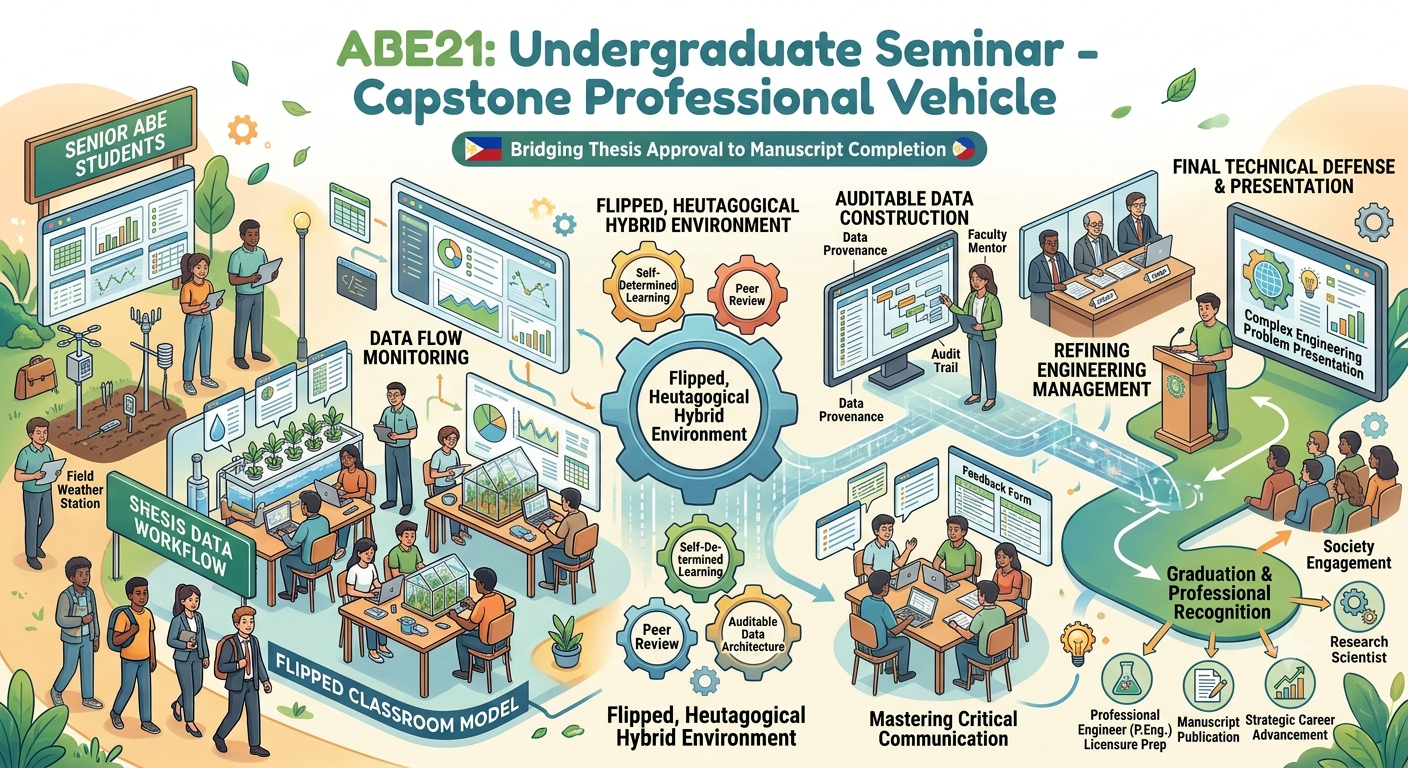
This course serves as the capstone professional vehicle for senior Agricultural and Biosystems Engineering students, actively bridging the gap between thesis approval and manuscript completion. Operating within a flipped, heutagogical hybrid environment, students autonomously track field and laboratory data collection workflows while refining their engineering management practices. Through rigorous peer review, auditable data architecture construction, and live technical defenses, students master the critical communication skills required to present complex engineering problems to both technical panels and society.
4 BSABE - A: Mondays 4:00 PM to 5:00PM
4 BSABE - B: Thursdays 11:00 AM to 12:00 PM
- Faculty: Saliling, Willie Jones
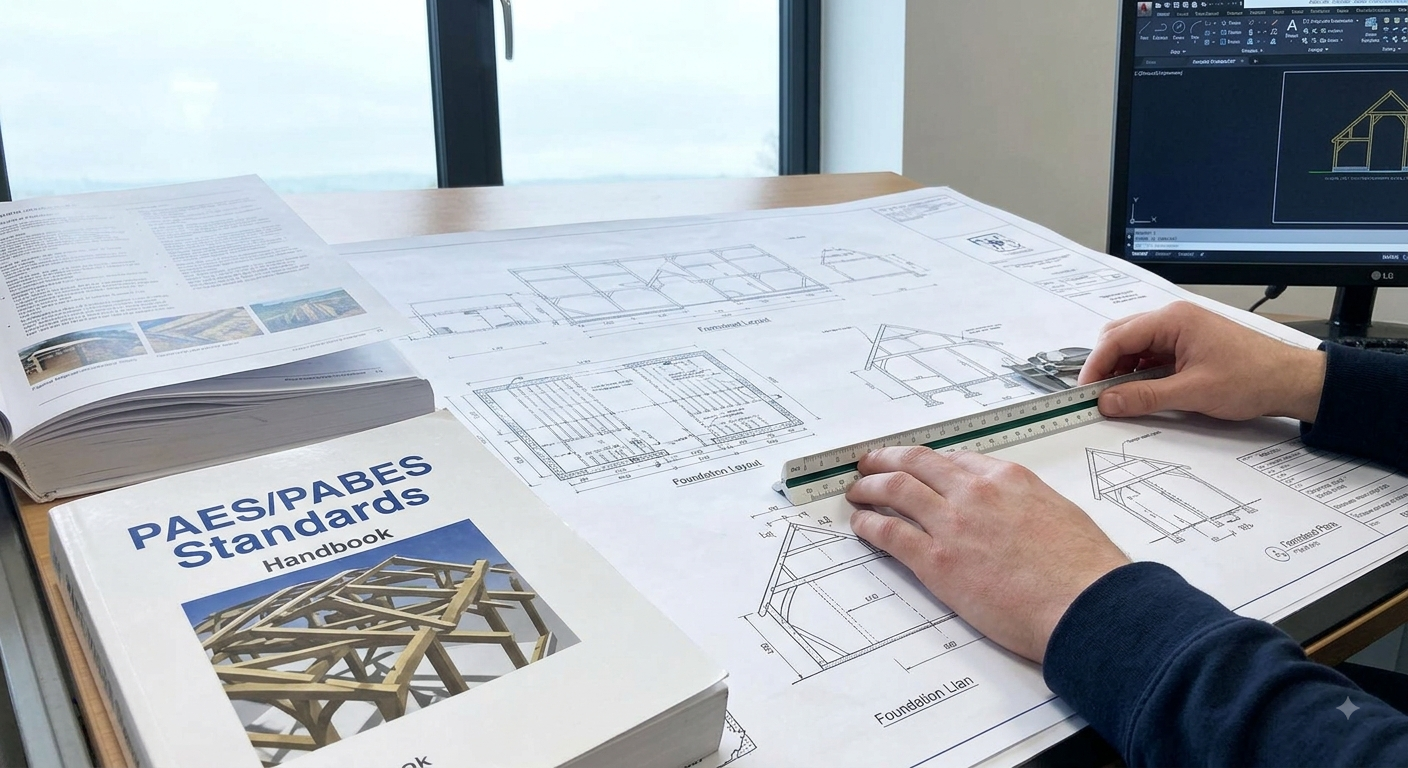
ABE17 equips junior BSABE students with the engineering principles required to design, evaluate, and manage vertical and horizontal agricultural structures. Integrating statics, dynamics, and strength of materials, the course covers structural analysis and member sizing for timber, concrete, and steel farm buildings. Students evaluate comprehensive engineering drawings, technical specifications, biosecurity zoning, environmental ventilation, pest barriers, and farmstead water supply networks following PAES/PABES standards. The course extends to horizontal infrastructure, including geometric design, pavement evaluation, and structural load analysis for farm-to-market roads and farm bridges. Utilizing a hybrid flipped-learning architecture and hands-on laboratory workshops, students gain practical skills in AutoCAD drafting, quantity surveying, Bill of Quantities (BOQ) preparation, and Program of Works (POW) development. Finally, students master construction quality control and project scheduling using PERT-CPM network calculations and CPES rating frameworks to manage farm building construction, operation, and maintenance effectively.
- Faculty: Saliling, Willie Jones
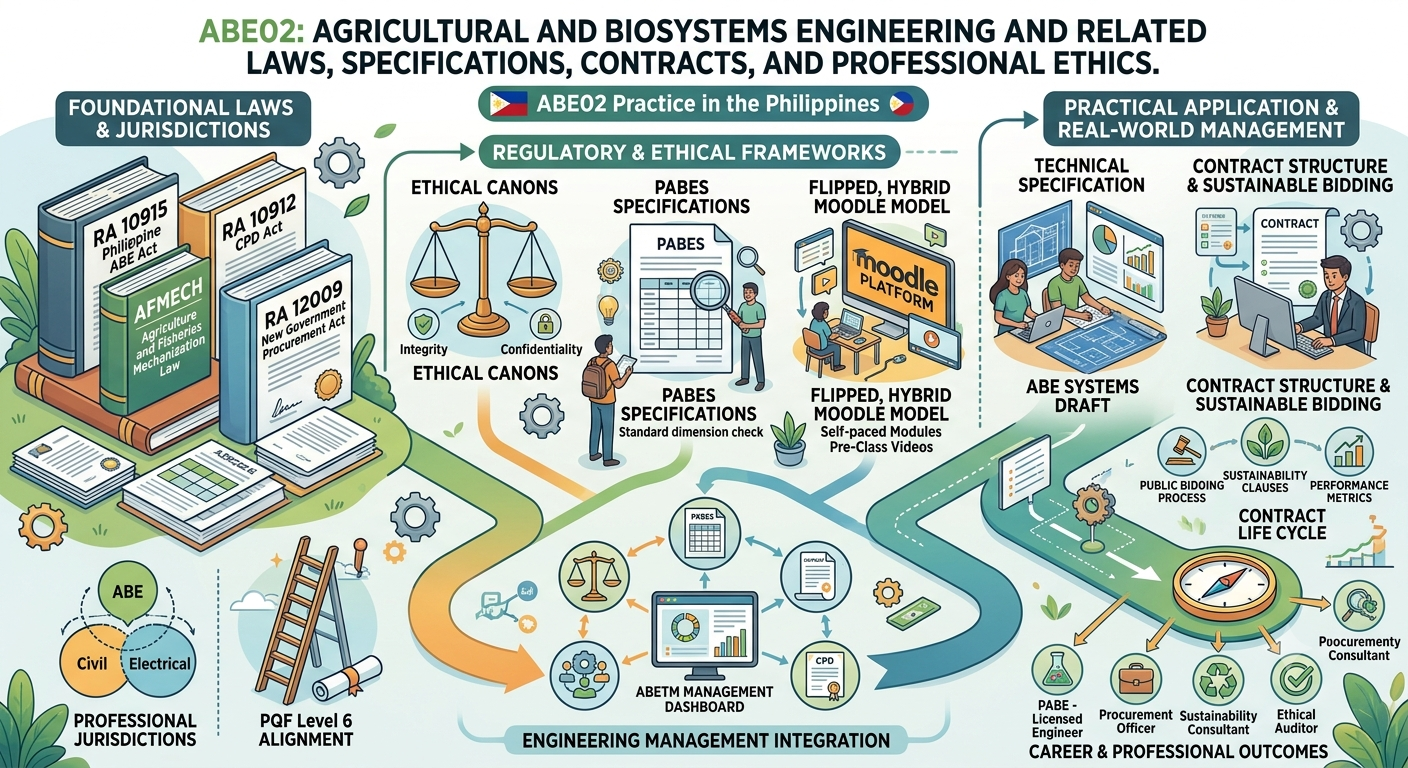
This course covers the legal, ethical, and administrative frameworks governing Agricultural and Biosystems Engineering (ABE) practice in the Philippines. Students explore professional jurisdictions, PQF Level 6 alignment, PABES specifications, and ethical canons alongside key laws including RA 10915, RA 10912 (CPD), AFMECH, and RA 12009 (New Government Procurement Act). Through a flipped, hybrid Moodle model, learners analyze multi-professional boundaries, draft technical specifications, and structure sustainable public bidding contracts for real-world engineering management.
Tuesdays 4:00 to 5:00 PM
- Faculty: Saliling, Willie Jones
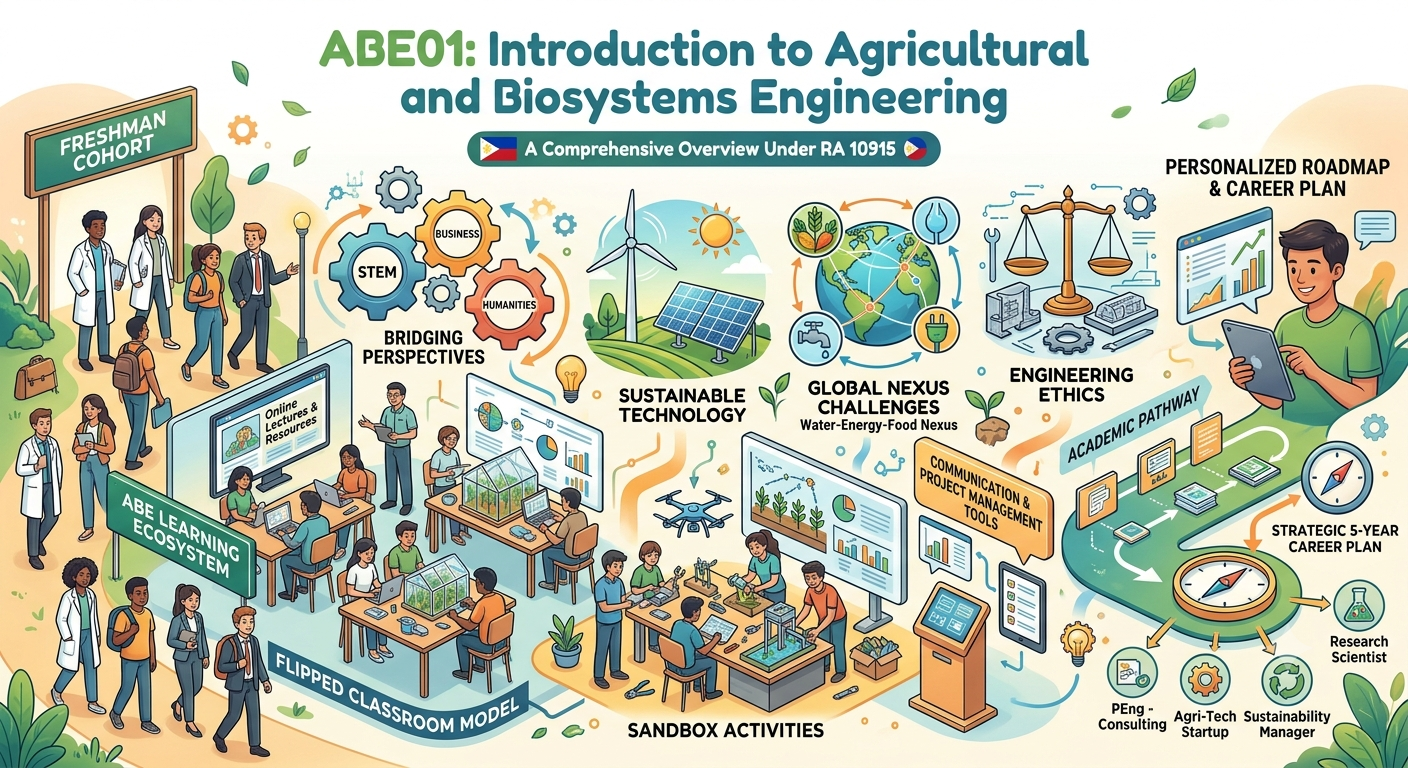
This introductory course provides a comprehensive overview of agricultural and biosystems engineering under RA 10915. Designed for a diverse freshman cohort, it bridges STEM, business, and humanities perspectives through a hybrid, flipped-classroom model. Students explore sustainable technology, global nexus challenges, and engineering ethics while mastering communication and project management tools. Through collaborative sandbox activities and personalized roadmap portfolios, learners map an individualized academic pathway and a strategic five-year post-graduation career plan.
Mondays 7:00 to 10:00 AM
Wednesdays 7:00 to 10:00 AM
- Faculty: Saliling, Willie Jones